Serving The Cane Growers of Fiji


Sugar Mill
During the 19th Century, several agricultural co-ops, including cotton and rubber, were tried in Fiji. But none, except sugar cane survived. The Colonial Sugar Refining Company (CSR) and the Australian Sugar Company took interest in Fiji during that time and endeavored to grow cane in several places. There were some 36 sugar mills located at several places in Fiji. The CSR built its first mill at Nausori in 1882. The second CSR mill was built at Rarawai in 1886. Then the Labasa mill was built in 1894. Lautoka was the last mill to be built by the CSR in Fiji, and it was built between 1902 and 1903.
Cane planting for the Lautoka mill began in 1902, and some 10 thousand acres were planted that year. The Lautoka Railway system was established together with the Rarawai rail system by 1908. The railway line to Sigatoka was built around 1912. The first crushing season for the mill was 1903, when it crushed 134,246 tonnes of cane in twenty six and a half weeks and produced 14,500 tonnes of sugar. The crushing rate achieved was 42 tonnes per hour. The first one million tonne crop for Lautoka was achieved in 1959. That time the mill was crushing at about 200 tonnes an hour and the cane crop for that year was 1,660,271 tonnes, which produced 160,220 tonnes of sugar.
Until 1909, CSR grew cane on its own plantations using indentured Indian Labourers. The abolishment of the indenture system in 1916 created a severe labour scarcity, and by 1924 the sugar industry faced the problem of labour shortage which required new initiative.
Over the years millions of dollars have been spent on upgrading the tramlines and the transport system. Upgrading of the mill, the sugar sheds and the terminal and loading systems, including the expansion of the cane belt.
The Corporation owns and operates three sugar mills located at Lautoka, Rarawai on the main island of Viti Levu while Labasa mill is located on the second largest island of Vanua Levu. The mills are strategically located on the drier side of the two larger islands where conditions are more suited to cane growing.
Over the years, the mill has undergone several upgrades and is now operated by the Fiji Sugar Corporation. It processes sugarcane harvested from surrounding districts and produces raw sugar for both local use and export. Despite challenges such as aging infrastructure and fluctuating production levels, the Lautoka Sugar Mill remains a key pillar of Fiji’s agricultural sector and rural livelihoods.
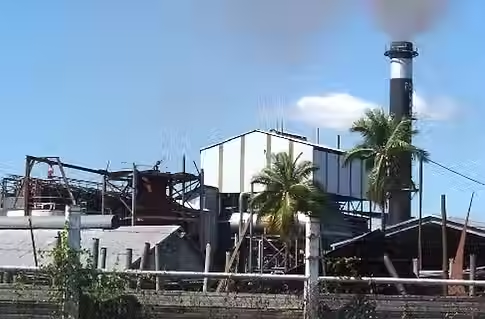
Lautoka Mill
The Lautoka Sugar Mill is the largest and most significant sugar processing facility in Fiji. Located in the “Sugar City” of Lautoka, it was established in 1903 by the Colonial Sugar Refining Company during the colonial era. The mill played a central role in the development of Fiji’s sugar industry, supporting thousands of cane farmers and contributing significantly to the country’s economy.
Rarawai Mill
The Ba Sugar Mill is one of Fiji’s major sugar processing facilities, established in 1886 during the early expansion of the country’s sugar industry. Originally developed by the Colonial Sugar Refining Company, the mill played a vital role in transforming Ba into a key agricultural hub.

Today, the mill is operated by the Fiji Sugar Corporation and processes sugarcane supplied by farmers across the Ba region. It produces raw sugar for domestic consumption and export, contributing significantly to Fiji’s economy. Despite ongoing challenges such as aging infrastructure and variable cane supply, the Ba Sugar Mill continues to support the livelihoods of many cane-growing communities.

Labasa Mill
Sugar Mill is one of Fiji’s key sugar processing facilities, established in 1894 during the expansion of the sugar industry under the Colonial Sugar Refining Company. Located in the Northern Division, it has long been central to the economic development of Labasa and surrounding rural communities.
Now operated by the Fiji Sugar Corporation, the mill processes sugarcane supplied by farmers across Vanua Levu and produces raw sugar for both local use and export. It remains a vital contributor to employment and livelihoods in the north, despite challenges such as aging infrastructure and fluctuating production levels.